Free Website Hosting

feature content slider

Destination

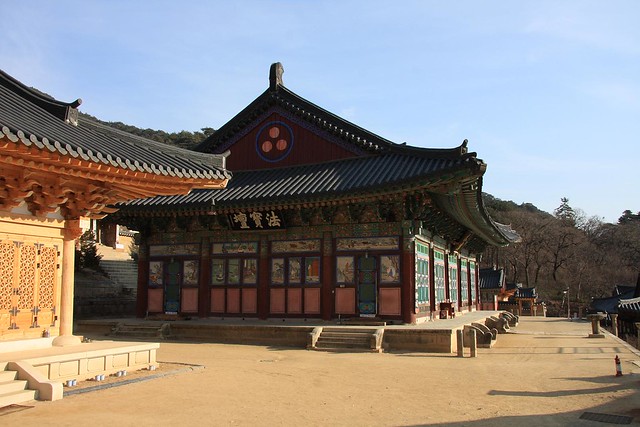
10 Famous Buddhist Temple in The World

Buddhism takes as its goal the escape from suffering and from the cycle of rebirth: the attainment of nirvana. There are between 230 million and 500 million Buddhists worldwide. An overview of the most famous Buddhist temples in the world.

Dragon Village at Tasikmalaya, West Java

If you are tired of life in a metropolitan city with its sky scrapers, you should take a few days off to stay in the Dragon village within Neglasari village, Salawu sub-district, Tasikmalaya, West Java. This 1.5 hectares village is still 'green' and not influenced by modernization..

Exotic Dieng Plateau

The name ‘dieng’ which literally translates as ‘abode of the Gods’ says all you need to know about this collection small ancient temples set in the remarkable volcanic landscape of the Dieng Plateau.

Living in the shadow of Indonesia's volcanoes

All hell is about to break loose, but Udi, a 60-year-old farmer from the village of Kinarejo on the Indonesian island of Java, will not budge. Not even though a mere three miles (five kilometers) separates the smoldering peak of Mount Merapi from Kinarejo.

National Geographic : Merapi Eruption

Nationalgeographic.com Smoke rises Monday from Indonesia's Mount Merapi, one of the world's most volatile and dangerous volcanoes.

May 28, 2010

Tourindonesiaunite Talkshow & Photo Exhibition

After the successful performance of Endah n Rhesa in the 1st pre event in Score, Ciwalk on April 23rd 2010, #tourindonesiaunite will hold the 2nd pre event to commemorate The National Education Day in this May. This inspiring event will be completed by the photos exhibition and talkshow on May 28th-30th 2010 in Braga City Walk Bandung. The theme of the photos which were contested before is 1001 dreams in the limited educational support in indonesia and those all were judged by the expert juries of photography; Galih Sedayu, Ari Angin and Deni Sugandi.

The summit agenda is talkshow about "Gerakan Hati, Satu Langkah membantu mengejar mimpi" which will be held on May 30th by inviting the activists of #tourindonesiaunite : Leonita Julian and Ramya Prajna as the resources. Moreover, #tourindonesiaunite will also allow everyone to vote Komodo as the new7wonders of nature on Vote Komodo booth.

In this event, the winners of photography contest will be announced. The whole event can be enjoyed for free cost included certificate. This 2nd pre event of #tourindonesiaunite is supported by Detik Bandung, Oz Radio , 99ersr radio, JONAS photo and Pikiran Rakyat.

#tourindonesiaunite which was supported by Pandji Pragiwaksono and Glenn Fredly and the 1st time with the main purpose to explore the spirit of indonesian youth is the charity event of education.

So, Book your weekend calendar now!

For the further information, please contact Wahyu; phone +62 856 244 65 431

May 15, 2010

The International Rinjani Mountain Climbing July 2010

The International Rinjani Mountain Climbing July 2010
The International Rinjani Mountain Climbing event in Lombok Island, West Nusa Tenggara (NTB), is scheduled in July 2010, with more foreign mountain climbers taking part.

"I have several times coordinated preparations of the international event in Jakarta, and this time its schedule has been set in July 2010," Head of the NTB Cultural and Tourism Agency Lalu Gita Ariadi said here Tuesday.

Ariadi said the organizers of the international event was set up by the Directorate General of Forest Protection and Natural Conservation (PHKA), of the Forestry Ministry.

Rinjani is the second highest volcano in Indonesia after Mt Kerinci (3,800 meters) in Sumatra, and has become very popular to local and foreign tourists.

The geo-tourism potentials include the beautiful cauldron, lake, peak, waterfalls, hot springs, caves, erruption history, blast-hole and new lava flow, and has therefore been suggested to become the first geopark in Indonesia.

The 3,726 meters high volcano had been suggested to be developed into Indonesia`s first geopark, or one of the 54 geoparks in 17 countries of the world.

Since placed under the management of RTMB, Rinjani had been several time been given national and international awards like the World Agency Award 2004 and the Tourism For Tomorrow Awards in 2006 and 2008.

The Rinjani Mountain Climbing will be started in mid-April to early in December, depending on weather conditions.

The route of the climb will reach Lake Segara Anak, by two routes namely the Senaru climb in 7-10 hours on foot covering eight kilometers, and Sembalun route in 8-10 hours.

Visitors who are already at Pelawangan would still need 4-5 hours to reach the peak of Rinjani through the climbing routes in forests.

Let's Exploring Indonesia and find the unique things from this country

Source: ANTARA News www.antara.co.id

April 29, 2010

12 countries to attend ethnic language congress in Baubau

Representatives of 12 countries have confirmed to attend an international ethnic language congress in the Southeast Sulawesi city of Baubau on July 8, 2010.

Local tourism and cultural office's archaeological service spokesman Ali Arham said Wednesday that out of 30 countries invited to attend the congress, 12 had confirmed their participation.

"They have sent their confirmation to us by email," Ali said, adding that the 12 countries included The Netherlands, Australia, the US, Brunei Darussalam, Malaysia and Papua New Guinea.

Ali said other countries expected to confirm their participation in the near future would be, among others, Germany, China, South Korea, Japan and Singapore.

He said that besides foreign participants, the congress would also be attended by a number of linguists from several universities in Indonesia.

Arham said the congress was aimed at enabling the participants to discuss various issues related to ethnic languages and literature.

The result of the congress would then be reported to the government to make a policy to preserve and develop other languages, he said.

source: the jakarta post

Hundreds to take part in Sail Indonesia

Around 220 participants from 22 countries across the world have confirmed their participation in the 10th of Sail Indonesia, which will start on July 24.

According to the annual sailing rally’s official website www.sailindonesia.net, the participants will depart from Darwin, Australia, and enter Indonesia through Kupang, the capital of East Nusa Tenggara (NTT).

Provincial tourism agency official Ubaldus Gogi told tempointeraktif.com on Tuesday the participants would visit Rote Ndao, Alor, Sikka, Nagekeo, Ende, South Central Timor and Labuan Bajo.

After spending a few days in Kupang, some the participants would take part in the Sail Banda in Maluku, while some others would visit Bali.

April 25, 2010

Enjoying Bumi Sriwijaya

by: garuda magazine
Packed with historic sites and renowned for the quality of its cuisine, Palembang’s charms are attractive indeed

Museum Sultan Mahmud Badaruddin II

Palembang, the capital of South Sumatera Province, is also known as Bumi Sriwijaya (Sriwijaya Land). In 712 AD this area was the centre of the largest and strongest maritime kingdom in Indonesia, whose influence reached as far as China in the North and Madagascar off the coast of Africa to the west.

“Nak kemano kita kak? (Where are we going now, sister?)” asked Pak Wicaksono with distinctive accent Palembang, the driver who was going to escort me on my journey around Bumi Sriwijaya.

The heavy rain that started in the early hours of the morning actually made me pretty reluctant to get moving. Because Palembang is on average only 12 metres above sea level, and with tides reaching 3 to 5 metres, several lower lying parts of the city, especially on the outskirts, are often flooded. However, I eventually decided to drive around while waiting for the rain to stop and started savouring the city which is officially the 17th Tourist Gateway in Indonesia.

Fifteen minutes out on the road and the rain eased, although the sun was still hiding behind the clouds as I arrived at Jembatan Ampera (Ampera Bridge), one of the city’s icons. It was built by Japan and was opened by President Soekarno in 1964; at that time it was the longest bridge in south east Asia.

The bridge across the River Musi is 1,177 metres long, 22 metres wide and 11.50 metres above the surface of the water. Early on it was called Musi Bridge but then in the 1970s it was renamed Ampera Bridge (the People’s Hardship Mandate).

Ampera Bridge

It used to be that the middle part of the bridge could be raised so that ships could pass underneath. However, since the 1970s, because people are more and more mobile and there are more vehicles, as well as for some technical reasons, the bascule bridge function is no longer in use.

From the bridge, I went to the area around Kuto Besak Fort which is close to the Museum of Sultan Mahmud Badaruddin and Mesjid Agung (the Great Mosque).

The Fort of Kuto Besak, whose walls are three metres high, was constructed by the Sultan of Palembang and it took 17 years to complete. It was built as a defence against the Dutch military who tried several times to capture Palembang. It is now used as the headquarters of Kodam II Sriwijaya (the regional military command) and Dr. A.K. Gani Hospital. This means that tourists are only able to see its exterior.

The Museum of Sultan Mahmud Badaruddin II, which faces the Musi River, is located at the northern end of Ampera Bridge. It was built by the Dutch authorities in 1823 on the site of the Sultan of Palembang’s palace which was destroyed when the Dutch attacked. The museum building, which is a combination of traditional Malay and Dutch colonial architecture, was used as a residence by Dutch officials. This museum has a collection of historical and cultural artefacts from Palembang.

Not far from the museum and the fort, the Great Mosque stands imposingly on the corner of Jl. Jenderal Sudirman and Jl. Merdeka. This mosque is one of the legacies of the Palembang Sultanate and was built by Sultan Mahmud Badaruddin I in 1740. The area in the vicinity of the mosque used to be the capital of the Islamic Kingdom of Palembang.

Masjid Agung Palembang

The tourists flock to the area around Kuto Besak Fort morn, noon and night. Many of them come here to appreciate the picturesque views with Ampera Bridge and the Musi River in the background. What is more, we can also rent a boat and cruise down what is often referred to as the river tourist town.

At night the area promises different charms: the sparkling lights that decorate Ampera Bridge; floating coffee shops offering the sensations of coffee and Palembang specialty snacks, such as pempek, amidst the rhythms and cadence of street musicians and the rocking motion of the Musi River’s ripples.

If the weather is inclement, the most interesting and tantalising tourist activity in Palembang is related to its delicious cuisine.

In almost every corner of Palembang we can find mobile food sellers on their bicycles or motorbikes, and foodstalls and restaurants along the streets, all offering Pelembang’s famous snack.

Pempek is well known and closely identified with Palembang. It is a kind of dumpling made from fish and tapioca flour, served with a thin sauce called cuko made from white sugar, garlic, table vinegar and chillies. It is said to be a dish with some foreign influence and has been in existence since the 16th Century when Sultan Mahmud Badaruddin II reigned in the Kingdom of Sriwijaya. An old Chinese man, so the story goes, thought it such a pity that the abundance of fish caught in the Musi River was not being put to good use. They only fried and salted them. After a bit of experimentation, the old man was finally successful and came up with a new snack and hawked it around town on his bicycle. People wanting to buy some called out to him: “Apek! Apek!” (meaning “old” in Chinese). Over the course of time, the food became known as empek-empek before finally changing to pempek.

Pempek, mie celor and biriyani rice, delicious cuisine from  Palembang

Apart from pempek, Palembang boasts other specialties with fish as their main ingredient such as model, tekwan and Palembang crackers, also known as kemplang, consisting of fried, grilled kemplang and kerupuk. Several other localities in South Sumatra, like Ogan Ilir and Ogan Komering Ilir, are well know for their salted fish and smoked fish. And another area is known for its Pindang.

Another kind of food that is no less delicious is celor noodle in Rumah Makan 26 Jl. Ilir HM Syafei. During holidays this smallish restaurant may sell as many as 1,000 portions of celor noodles in a day. The secret of its tastiness is way that the flavour of shrimp is allowed to dominate the other ingredients. The noodles are the yellow egg kind but, while egg noodles are usually curly, these are much bigger and straight rather like spaghetti. Those who have not tried celor noodle before may well think it is a variant of the famous Italian pasta.

It was still pouring when I arrived at No. 30 Jl. Kiranggo Wirosentiko, Ilir, Palembang. Along this street there are a lot of craftspeople producing woven cloth called songket and several songket boutiques. Palembang’s songket, both in the form of broadcloth and scarves, is nowadays well known all over Indonesia, especially after it being heavily promoted at various events, festivals and exhibitions.

Songket is a traditional craft native to Palembang, using silk combined with golden threads woven with a high degree of artistry. It is a cottage industry and normally carried out by women.

Songket, which is usually quite expensive, utilizes various motifs such as lepus, jando beraes, bunga inten, tretes midar, pulir biru, kembang suku hijau, bungo cino, bunga pacik and others. Women usually wear them for weddings, formal parties and traditional ceremonies.

One of the boutiques that travellers often visit is Fikri Collection, which sells different kinds of songket with both traditional and the most up-to-date designs. There are about 20 craftspeople employed there and we can see them at work. There are about 50 others who carry out their craft and work from home. The price varies from Rp. 600,000 to several million rupiah, depending on the type of material and the motif.

Besides visiting the weaving district on Jl. Kiranggo Wirosentiko, I also went to Kampoeng BNI Tenun Songket in Muara Penimbung Village, Indralaya, in the Regency of Ogan Ilir, South Sumatera. The weaving kampong that lies about 35 kilometres from Palembang was inaugurated by the Coordinating Minister of Economics, Hatta Rajasa, last February.

Songket in the weaving process.The Songket Weaving Village was developed by BNI to produce songket cloth. This cottage industry so far has not been able to reach optimal production nor have the villagers prospered. In BNI’s programme, called PKBL (Program Kerja Bina Lingkungan or Environment Building Work Programme), the craftspeople receive training, consultation, capital and help with marketing.

Like other big cities in Indonesia, the traffic in Palembang is heavy. In order to provide its people with decent, safe and inexpensive public transport, the local authorities are planning to launch a bus service called “Trans-Musi” to replace the current bus routes. However, those old buses are certainly interesting with pictures covering almost the entire windscreen!

The last ten years in Palembang have seen a lot of changes. The common impression that a trip there will not be comfortable one has changed. Now it is safe and pleasant, and the clean up continues as it prepares itself to become the host and venue for the SEA GAMES XXVI next year.

Getting to Palembang:
Garuda Indonesia has 49 flights on the Jakarta-Palembang vv route every week.

April 15, 2010

Pangandaran Beach

Pangandaran is a small town and a subdistrict in southern Ciamis regency, West Java, Indonesia. It is located on the southern coast of Java. Pangandaran is a popular tourist destination, having a beach which is considered to be one of the finest in Java and which offers excellent surfing.

A kite-flying festival is held on the beach in July and August. It is reported that the locals used to fly kites in the evenings to catch bats, and may still do so. There is a local belief that wearing any green garment in this area will anger Loro Kidul, the Javanese guardian spirit or goddess of the southern sea, and will bring misfortune.

The Penanjung Pangandaran nature reserve is nearby on a peninsula connected to the mainland by a narrow neck of land. About eighty percent of the nature reserve is secondary rainforest. The flora of the nature reserve includes the Rafflesia.

A tsunami hit the area on 17 July 2006. An undersea earthquake measured at 7.7 on the Richter scale triggered a three metre high tidal wave. Extensive damage was caused and hundreds of people were reported to be dead or missing

Pangandaran is a Tourist Location in West Java, Indonesia. Pangandaran is Family friendly and has also for individual Tourists much to offer. In the Bay Area Pananjung are two beautiful Beaches for swimming, surfing or just relaxing. Here you have much Activities and Adventures like Trekking, Snorkeling, Fishing and many more..

The National Park
On the southside From Pangandaran is a National Park mostly as Jungle. You can Walk there with a Guide to the beautiful Waterfalls and enjoy the flora and fauna. Or by a 1 day Trip around the Park

Batu Karas
Batu Karas is a little Village 1 hour away from Pangandaran. It's famous for Surfing there.

Batu Hiu
Batu Hiu is a Place between Pangandaran and Batu Karas. Batu Hiu means Shark's Rock wich is a coastal rock having the shape of a shark. It's nice for relaxing there or swimming at the Beach.

Green Canyon
The best Way to go to the Green Canyon is with a Guide or by Rent a Motorbyke. At a Boat Station are many Boats who drive to the Green Canyon. After 45 Minutes Boat drive over a nice River you are there. There is also the chance to swimming in the Green Canyon.

Getting Here
Pangandaran is locatet at the Southcoast from West Java, Indonesia in the District Ciamis. See the Descriptions above and the Map for further Information.

From Jakarta
A fast Way from Jakarta is by bus. The buses drive nearly every hour from Kampung Rambutan bus station toward Pangandaran. Most buses drive directly to Pangandaran. With some buses you have to change the bus in Ciamis or Banjar. The trip lasts around 7 hours and cost around Rp.50'000 without AC and around Rp.80'000 with AC. The fee depends on the bus company.

It's also possible to rent a Car with a Driver in Jakarta. This will cost around Rp.1'500'000.

From Bandung
With the bus you reach Pangandaran on the bus station Cicaheum. Some buses drive directly to Pangandaran. With some buses you have to change the bus in Ciamis or Banjar. It's recommendable to take a bus who drive direct to Pangandaran. The buses from Banjar are small and mostly overcrowded.

April 11, 2010

Maluku, the beautiful archipelago from east of Indonesia

Maluku (Moluccas), a region of Indonesia formerly known as the Spice Islands, was once the source of cloves and nutmeg, spices highly valued for their aroma, preservative ability, and use in medicine before people learned how to cultivate the plants in other parts of the world. Maluku is a cluster of about one thousand islands totaling 74,504 square kilometers, forming part of the Malay Archipelago in eastern Indonesia near New Guinea. The region is divided into two provinces, Maluku with its capital in Ambon, and North Maluku (2002 estimated population 913,000), with its capital in Ternate; other important islands in the group include Halmahera, Seram, and Buru.

Its approximately 1000 islands support a population of less than 1.7 million people. The average population density figure is 19 people per-square kilometer, but the distribution is uneven. Air and sea transportation is the main means, which link the islands together. The province has 32 seaports and 20 airports, and only about 160 km of roads. However, good roads on many of the islands provide easy access to the often-remote places of tourists' interest.
Maluku lies in the transition zone between Asiatic and Australian flora and fauna and has a tropical climate. Maluku's flora includes meranti trees and many kinds of orchids; distinctive fauna includes cuscuses, birds of paradise, wild goats, and parrots. The economy is based on subsistence agriculture, especially sago (the sago palm, producing a starch used in food), and on the export of such products as spices, cacao, coffee, coconuts, fish, and minerals. Important indigenous groups include the Ambonese.

A great variety of endemic plant and animal species are found in the rugged forest-covered and mountainous hinterlands of most of the islands. A few of the best known are the Rucker-tailed kingfisher, the red-crested Moluccan cockatoo, and various brilliantly colored lorikeets and parrots. Most of Maluku sits astride one of the world's most volatile volcanic belts.

GEOGRAPHICALLY
Maluku province with its capital Ambon, stay at 30 north latitudes 8,300 south latitudes and 1250 - 1350 east longitudes with the area boundaries:
North side: North Maluku Province
South side: Timor Leste and Australia
West Side: Southeast Sulawesi and Central Sulawesi
East Side: Irian Jaya Province

THE WIDE AREA
The wide area of Maluku province is 712.479,69 km_, with the land wide is 54.185km_ and sea wide is 658.294,69km_.
The Maluku Province plain is 85.728 km2 width or 8.572.800 Ha contain of 3 part that is:
- Flat Land: 1.251.630 Ha width (14,6%)
- Wavy Land: 2.417.530 Ha width (28,2%)
- Hilly and Mountainous Land: 4.903.640 Ha width (57,2%)
Almost, Maluku has no upland. The mountain is a back that spread in the middle of the island, forming the mountain with the highest of 3.055 m.

TOPOGRAPHY
Maluku province consists of mountains, islands that spread from west to east and form north to south among 1150 km.

GOVERNMENT ADMINISTRATION AREA
Administratively, Maluku Province divided into four regencies and one city that is:
1. Central Maluku regency with 15 districts, 296 villages and 6 sub-districts.
2. Southeast Maluku regency with 8 districts, 229 villages and 6 sub-districts.
3. West-Southeast Maluku regency with 5 districts, 187 villages and 1 sub-district.
4. Buru regency with 3 districts, 62 villages.
5. Ambon city with 3 districts, 30 villages and 20 sub-districts.

CLIMATE
Maluku has 2 seasons, that is: west season or north, and southeast or east. West season in Maluku is come from December until March, while April is transition season to southeast season. Southeast season is average 6 months begin from May and end on October. The transition to West season is on November.
The homogenate seasons are give different affect to the land and its sea in this region. The temperature is about 26,2 C (in Southeast Maluku especially in rainy).

Twitter Delicious Facebook Digg Stumbleupon Favorites More